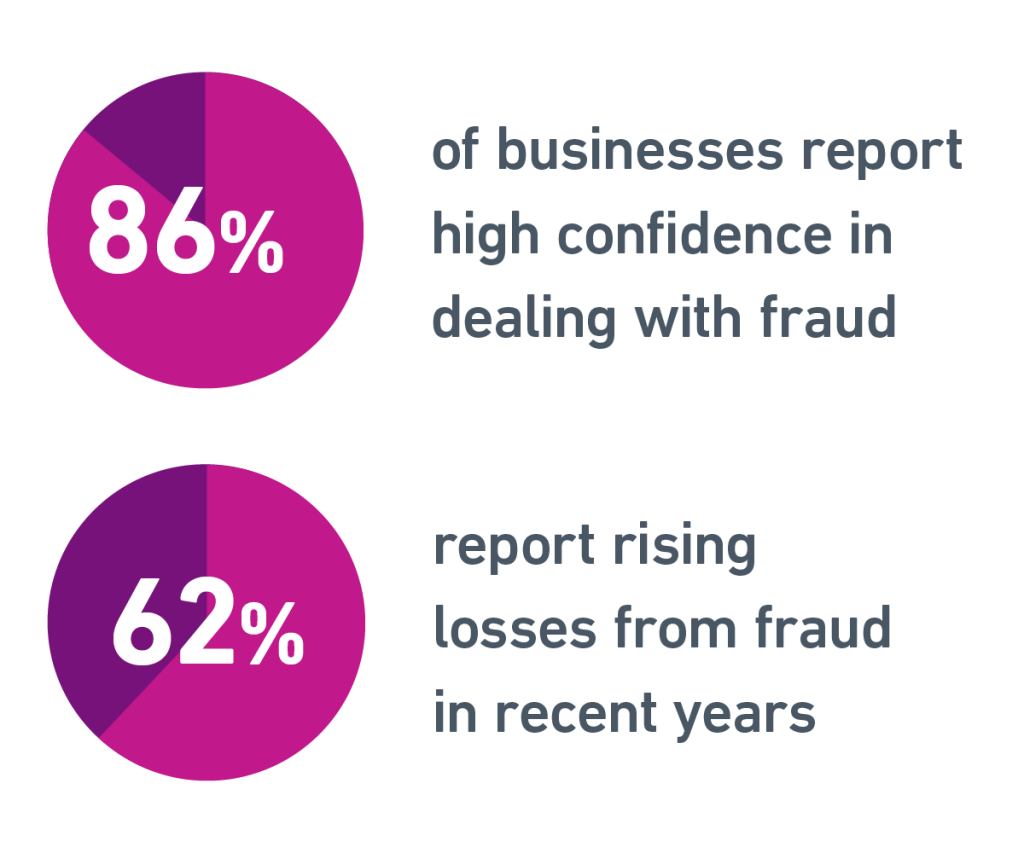
If UK businesses feel confident in their efforts to tackle fraud and financial crime, why are fraud losses still rising? Are we facing a ‘reality gap’?
Artificial intelligence is reshaping the fraud landscape at an unprecedented pace. While organisations report growing confidence in their ability to tackle fraud and financial crime, rising losses suggest a widening gap between perceived readiness and the reality of increasingly sophisticated threats. As fraudsters embrace new technologies and digital ecosystems continue to evolve, businesses must rethink how they protect customers, manage risk and build trust.
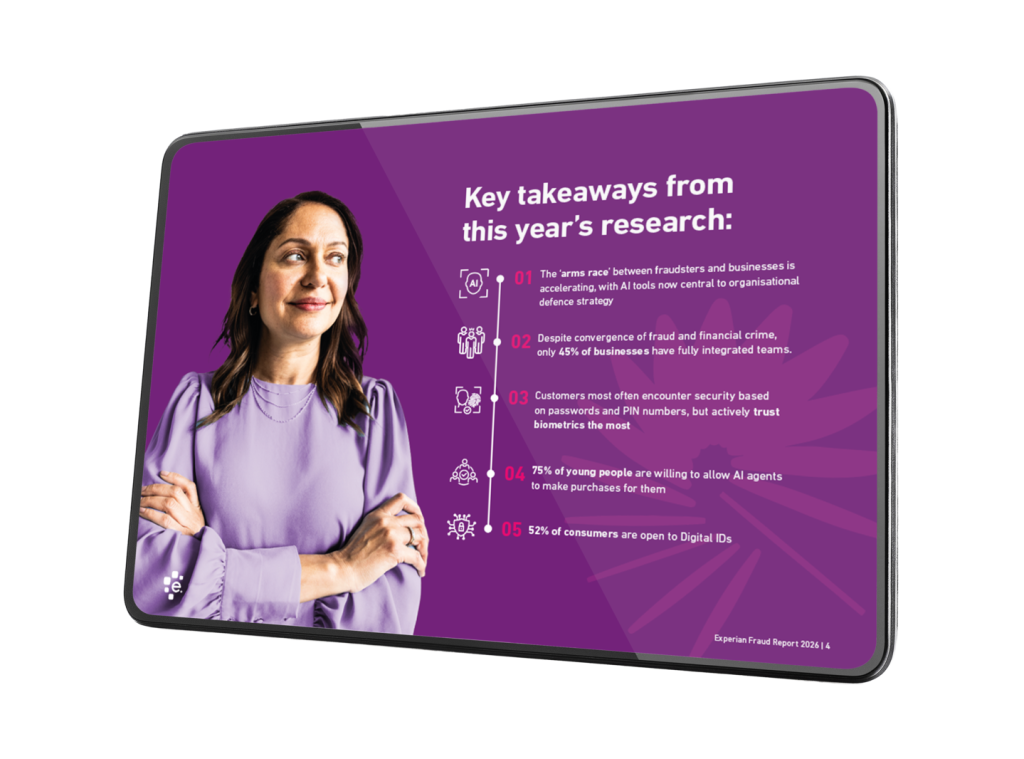
Drawing on insights from more than 2,000 UK consumers and 500 UK businesses, the 2026 Experian UK Fraud, Financial and Identity Crime Report explores the trends defining the future of fraud prevention. From AI-enabled fraud and the convergence of fraud and financial crime, to digital identities and the rise of agentic AI, the report examines how organisations can navigate emerging risks while delivering secure, seamless customer experiences.
Download the report now to equip your organisation with the knowledge and tools needed to thrive in a rapidly evolving landscape.
In this year's report, we cover:

Reality gap
Confidence vs capability

AI arms race
Fraudsters vs business

Agentic commerce
The rise of AI agents

Digital identity
Trust, privacy and control
A sneak peek into:
Experian UK Fraud, Financial and Identity Crime Report 2026: Navigating the next generation of fraud and financial crime risk
Foreword
If UK businesses feel confident in their efforts to tackle fraud and financial crime, why are fraud losses still rising? Are we facing a ‘reality gap’?
This is one of the tensions that emerged from our annual survey exploring the impact of fraud and financial crime on UK businesses and consumers. Organisations across the economy reported a high level of confidence in their ability to manage fraud risk. Yet overall losses from fraud are on the rise. This begs the question of whether a gap is emerging between readiness and reality.
Tackling fraud certainly remains a priority for organisations, with almost three-quarters (73%) saying they will be expecting their fraud management budgets to increase in 2026. But are these investments targeting the right areas to address the changing nature of fraud?
It’s clear that businesses are waging an accelerating technological ‘arms race’ against sophisticated AI-enabled fraudsters, as well as threats from authorised push payment (APP) fraud, synthetic identities and account takeovers. While businesses explore and test the potential applications of AI within their fraud prevention and detection systems, the threats they are seeking to address are constantly shifting and evolving.
Did you enjoy the read?
Download the full Experian UK Fraud, Financial and Identity Crime Report 2026
Understand how businesses must rethink how they protect customers, manage risk and build trust.
Further reading

How lenders win on price comparison websites
Explore how real‑time optimisation, data‑driven decisioning and self‑serve strategy tools help lenders compete and maximise profitability on PCWs

Data that delivers: Four takeaways from the AI and Big Data Expo
Explore four key takeaways from the AI & Big Data Expo, revealing why data quality, governance and ethics are essential foundations for scaling AI successfully.

The complete guide to social media checks for schools and colleges
Social media checks are essential for safeguarding in schools and colleges, helping to reduce risk and support compliance with KCSIE guidelines.

What is age verification?
Age verification helps protect consumers from early access to age-restricted products. UK age verification regulations for online operators have changed!

Why the financial services sector is taking a new approach to ensuring data quality
Explore strategies for improving data quality in financial services through democratisation, governance, and advanced data management tools.

B2B lead generation in sales
Discover B2B marketing and lead generation strategies to enhance your sales funnel, empower your sales team, and overcome challenges to growth.
ModelOps Report 2024
Our latest report shows you how to overcome barriers to accelerate, maintain and deploy the next generation of predictive analytical models.

4 ways to grow your commercial lending
Finding new, innovative ways to grow your commercial lending portfolio can seem complex. How can you better understand customers and find new opportunities?

Financial Crime: your complete guide
An ever-present threat for sectors and businesses across the world. Learn how data sharing can help with regulatory compliance and prevent your risk of FinCrime.