
Why does the electoral register matter?
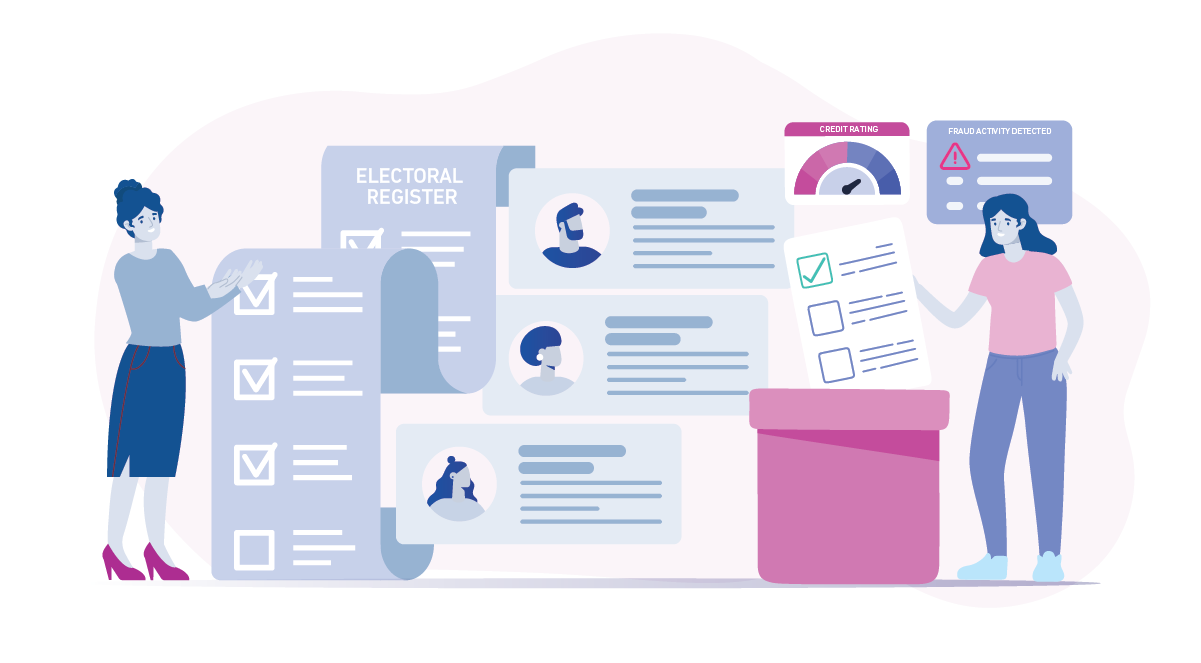
For the public, being on the electoral register helps people have their voice heard and vote in local and national elections and referendums. It also supports credit checks for loans, mortgages, and credit cards, as many lenders use it to verify identity.
Organisations can only use data from the full electoral register for specific, approved purposes, such as profiling, analysis, or certain types of reporting. However, the edited open register can be used to provide customer insight and data enrichment by adding to other datasets, helping build a more accurate view of a person and their information.
What is the electoral register?
The UK electoral register – sometimes called the ‘electoral roll’ – is an official list of people who are registered (and therefore eligible) to vote in elections and referendums. It is maintained by local councils. The full register is not publicly available, and is used for:
- electoral administration (e.g. sending poll cards ahead of an election)
- campaigning activities (e.g. for political party fundraising)
- checking credit applications
- preventing and detecting crime (e.g. fraud)
- calling people for jury service within England, Wales, and Northern Ireland.
There is also an edited register, the Open Register, which can be used by organisations for marketing, data matching and other purposes.
UK law requires anyone eligible to vote to provide their details for the electoral register. This includes:
- Name, date of birth, and address
- Proof of identity
- National Insurance number
The register can also be used for other legal purposes, including:
- electoral administration (e.g. sending poll cards ahead of an election)
- campaigning activities (e.g. for political party fundraising)
- checking credit applications
- preventing and detecting crime (e.g. fraud)
- calling people for jury service within England, Wales, and Northern Ireland.
What is the open register?
The open register is a subset or edited version of the full UK electoral register. The information on it can be bought from a local authority by any person, organisation, or charity to undertake marketing or data-related tasks. Individuals can choose to opt out of the open register.
The open register can be used for data-verification and marketing tasks including:
- checking the identity and validating addresses of people who apply for products and services
- maintaining contact information for mailing lists and marketing purposes
- contacting people who have made charity donations and could help further with fundraising
- tracing people who are in debt and may have changed their address without notifying anyone
- checking the identity of potential tenants ahead of renting to them
- verifying the details of a job applicant before hiring.
Unlike the electoral register, people can ask for their details to be removed from the edited electoral roll and it won’t affect their right to vote.
Key takeaway
The electoral register is an official list of people who are able to vote in UK elections and referendums. Within this is the edited electoral roll or ‘open register’, which can be an effective database for companies to use when undertaking identity verification.
Understanding the electoral register
Previously the ‘head of the household’ was responsible for registering the details of everyone living at a single address. However, individual electoral registration was introduced in England, Scotland, and Wales in 2014.
While the register is published once a year, it is kept updated every month meaning data typically remains accurate and high quality.
Information for the register is collected by electoral registration offices who contact households each July during the annual canvass. This is to check that they are in fact registered to vote and if so, whether their details are correct. UK citizens who live abroad still have voting rights and can register as an overseas voter.
If the electoral registration office asks a person to register (and they meet the requirements to do so), they must comply or risk being fined up to £1,000.
If a person would like to remove their details from the edited electoral roll, they can opt out and it won’t affect their voting rights.
Why is electoral register data important for organisations?
Using data from the electoral register, or edited electoral roll, is another line of defence in assessing whether a customer is who they say they are. This in turn can help you make more effective business decisions, such as reducing the chance of accepting a service or credit application from a potentially risky (i.e. fraudulent) customer.
Let’s take a deeper dive into the benefits:
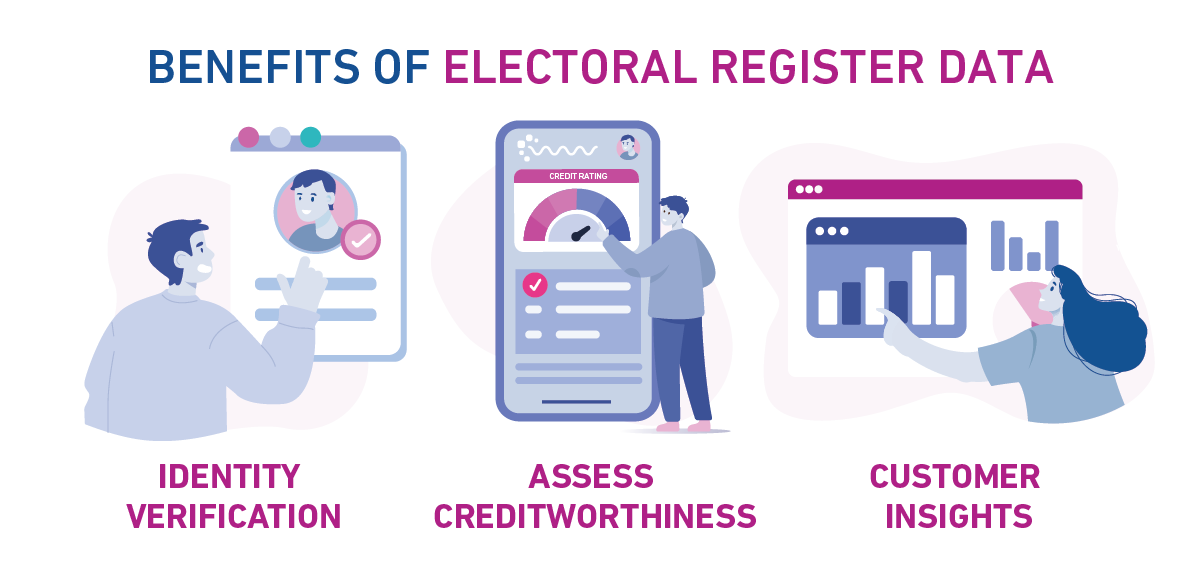
Undertake robust identity verification
As mentioned, using the register to verify someone’s identity can help mitigate against fraudulent activity and financial crime. This is particularly important for companies within financial services or banking.
Assess a person’s creditworthiness
Being on the electoral register can help people improve their credit score. It’s one of the most reliable ways of verifying identity and the more security a lender has in somebody’s identity, the more confident they will be to lend money to them.
Gain better customer insights for tailored marketing
Using open register data can help organisations better understand the demographics and location information within their audiences. This in turn makes it easier to undertake data segmentation, the insights of which can help with more tailored marketing campaigns.
Ensure adherence to compliance and legal requirements
Some industries require proof of residence for regulatory and legal compliance. These can include financial services, education, or healthcare. Electoral register data is some of the most robust proof of residence you can provide, making it a valuable data source.
Key takeaway
Electoral and open register data has many beneficial uses. From robust identity verification to better targeted marketing campaigns, this information can help you achieve a variety of business objectives, no matter your industry.
How to collect, store, and use electoral register data responsibly
Collecting, storing, and using electoral register data requires the same level of security and GDPR compliance as with any data information management.
Take a look at our key steps and considerations when acquiring and working with electoral register and edited electoral roll data:
1. Collect your required data
There are only a handful of groups who can access electoral register data. These include registered political parties, candidates, and registered referendum campaigners, and even then there are limits to access.
Private companies can access data available on the open register but they must ensure compliance with any data protection legalities, such as GDPR. It is also wise to practice data minimisation and only collect the data necessary for your company’s required purpose or objective.
2. Store the data safely
As with all data storage, secure systems are a necessity. Use access-controlled, encrypted environments and restrict them to only the people who’ll be working with that specific data.
Monitoring and governance frameworks are also a good idea to ensure this data remains accurate and up to date in your system.
3. Use the information responsibly
Responsible and ethical use of data is a requirement for any type of information you hold about a customer. This includes ensuring that it is used fairly and in a transparent way.
Individuals have a right to know how their data is being used and can request access to their information, so be sure your company is compliant and has efficient management processes in place to surface this when necessary.
Key takeaway
Gathering, storing, and using information from the electoral register requires the same legal and regulatory compliance as any other data. Ensure your team has tight processes and restrictions in place to avoid any legal or financial penalties from non-compliance.
The electoral register and edited electoral register hold important data that can be key in identity verification or marketing and communications. Accessing, storing, and using this data comes with a number of restrictions and legalities to comply with, but it can be hugely beneficial and one of the most effective ways to check and validate that a person is who they say they are.
How can we help?
We process the latest version of the edited electoral register, including monthly updates from local authorities. We can help you use this, and other datasets, to their maximum potential. From data profiling software that helps you analyse large volumes of information, to data management tools that ensure you create efficient data management processes, we have solutions for all objectives.