
What is ISO 20022?
ISO 20022 is a global financial messaging standard that modernises and harmonises how payment data is structured and exchanged. It introduces richer, machine‑readable information that improves straight‑through processing, enhances fraud and AML screening, and reduces manual investigations.
As it becomes the foundation for major cross‑border and high‑value payment systems, ISO 20022 requires organisations to capture complete, accurate and structured address data. With hybrid formats mandatory from 2025 and full structured‑address requirements by November 2026, ISO 20022 makes high‑quality address data essential for compliant, efficient payments.
The global shift to ISO 20022 is transforming payments, and high‑quality address data sits at the centre of this change.
From November 2025, organisations across the globe involved in cross‑border payments are required to capture and maintain complete, accurate and structured postal address data. By November 2026, unstructured addresses will no longer be accepted in CBPR+ payment messages and will be automatically rejected [¹].
At the same time, adoption is accelerating. SWIFT predicts that ISO 20022 will underpin all major reserve‑currency high‑value payment systems, representing 80% of global payment volume and 87% of transaction value worldwide [²].
This makes address data quality an immediate, non‑negotiable priority for banks, corporates, insurers, payment processors and asset managers.
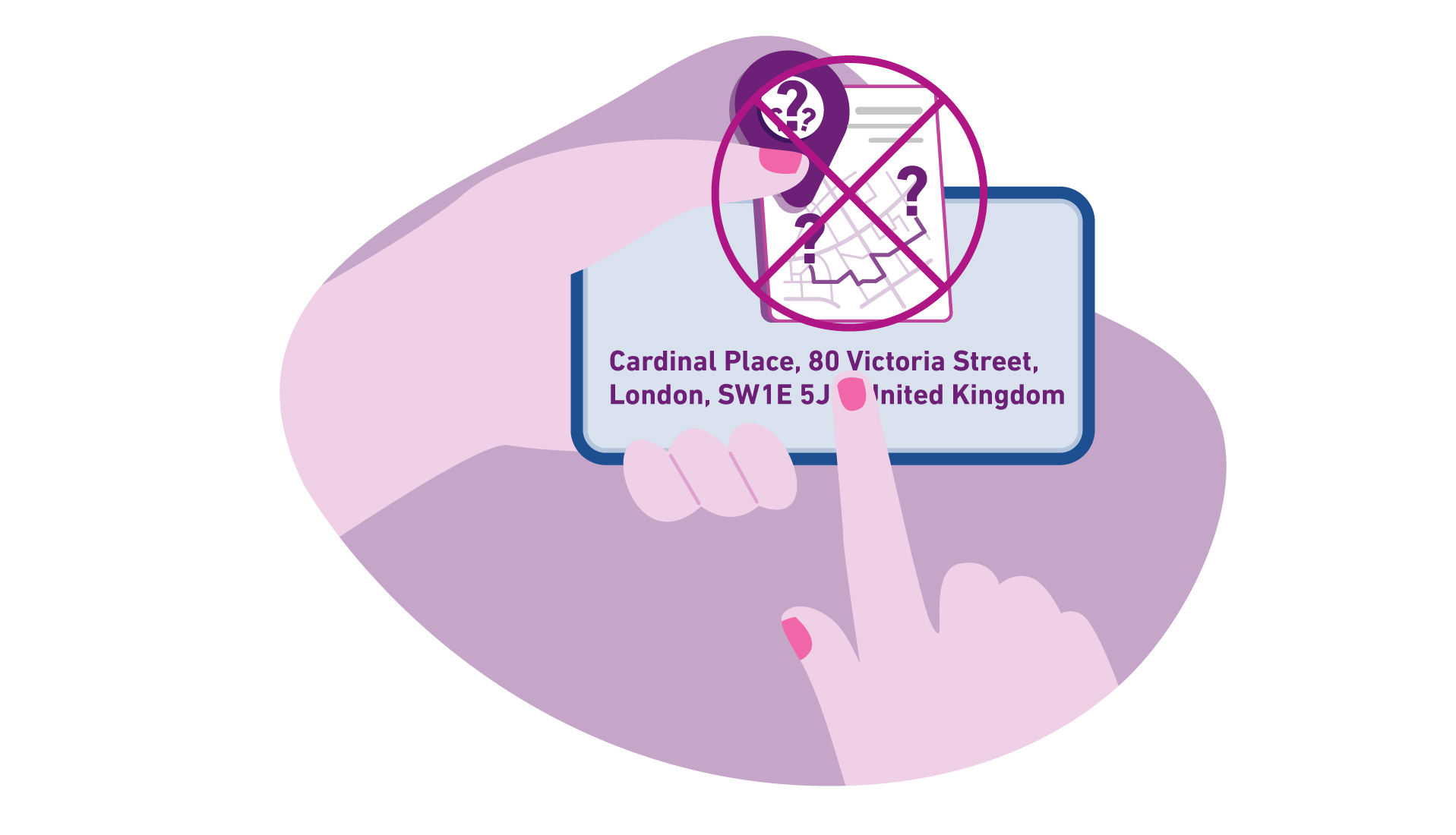
Why ISO 20022 matters
ISO 20022 introduces richer, more structured data that enables:
- improved straight‑through processing (STP)
- more accurate sanctions and AML screening
- fewer manual investigations
- improved fraud prevention and analytics
But these benefits depend entirely on consistent, high‑quality data.
The Bank for International Settlements (BIS) warns that fragmented or inconsistent ISO 20022 data “could limit its benefits,” reinforcing the need for harmonised, structured information.
Address data is one of the biggest and most overlooked gaps.
The new ISO 20022 requirements
From November 2025
Hybrid address format becomes mandatory.
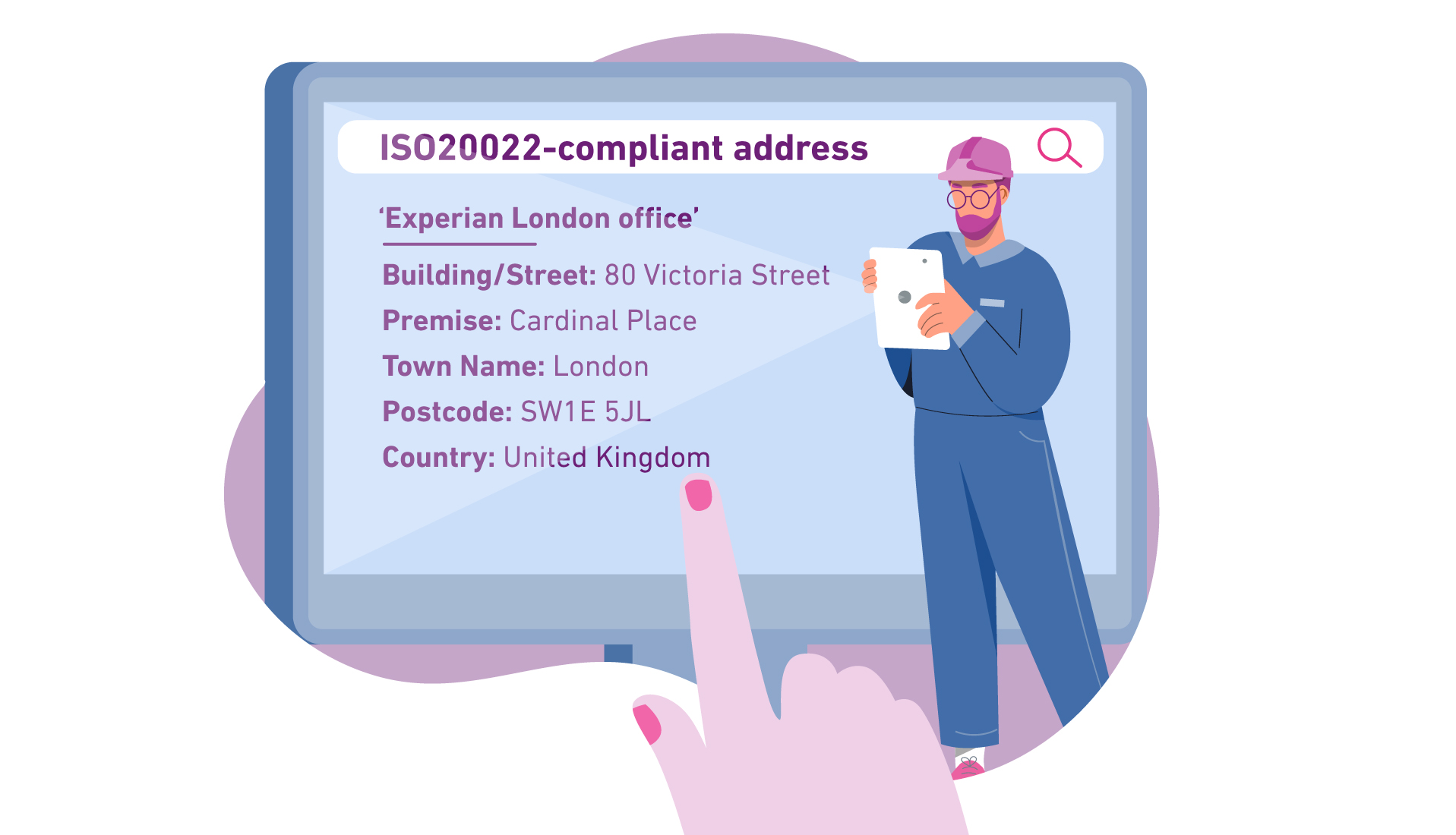
*Under ISO 20022, a hybrid address captures the most important fields, such as Town and Country, in dedicated structured fields, while allowing the remaining address details to stay in one unstructured line.
From November 2026
Unstructured address formats will no longer be permitted.
Every outbound payment message must be structured, including:
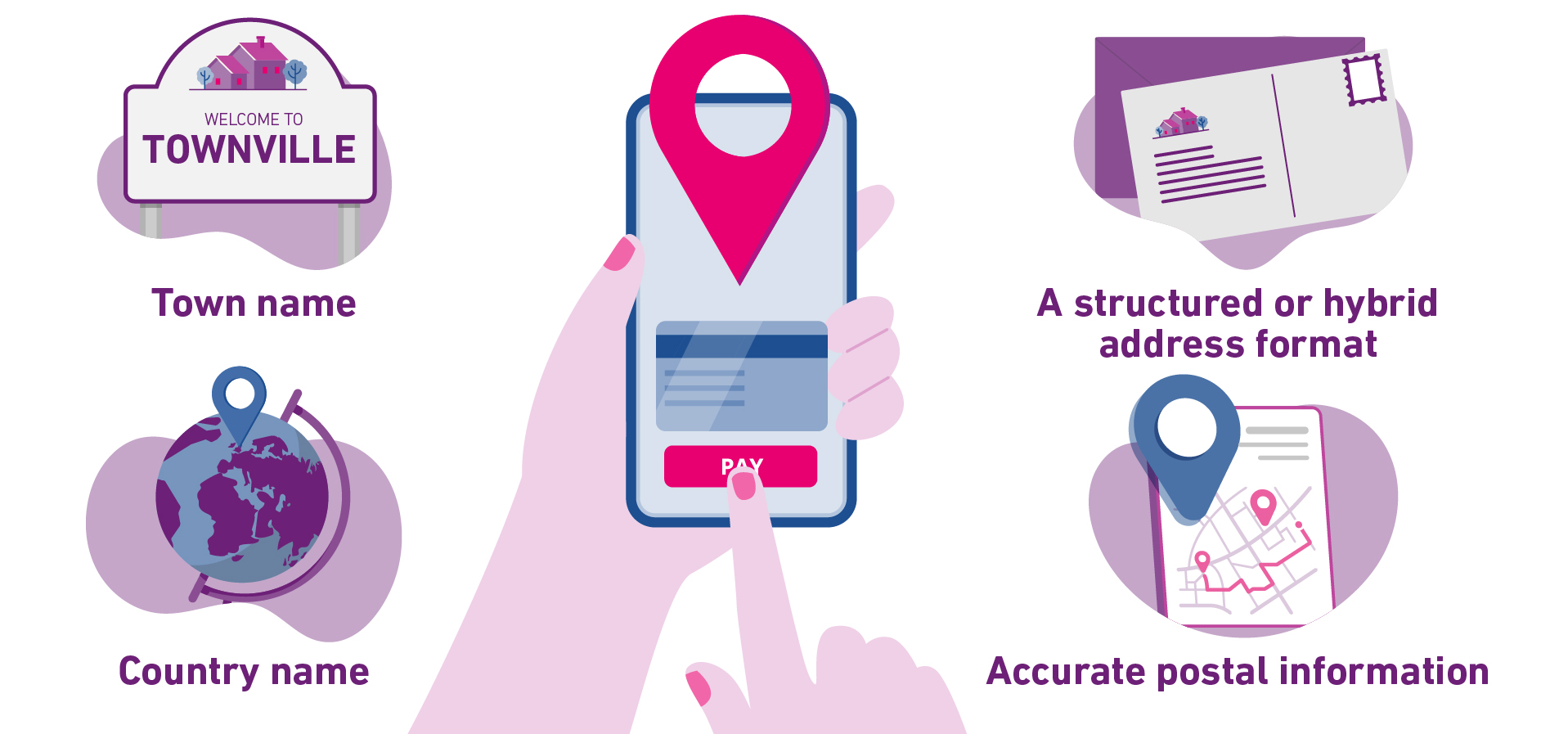
- Town name
- Country name
- A structured or hybrid address format
- Accurate postal information
Yet most organisations are not ready. Many CRMs, ERPs and policy systems still store addresses in single, unstructured fields, often missing key elements or using mis‑ordered, inconsistent formats.
The hidden challenge: legacy address data
ISO 20022 requires structured, authoritative address elements but most organisations rely on decades of legacy address data held in free‑text formats across core systems.
Common issues include:
- missing mandatory fields
- comma‑separated or multi‑line free text
- inconsistent local‑language variations
- truncated or ambiguous entries
- inconsistent formatting across markets
The complexity is global. There are over 130 address formats across 250 countries and territories, and many regions do not have standardised postal authorities [³].
This diversity is exactly why ISO 20022 mandates structured, machine‑readable address data.
What happens if you do nothing?
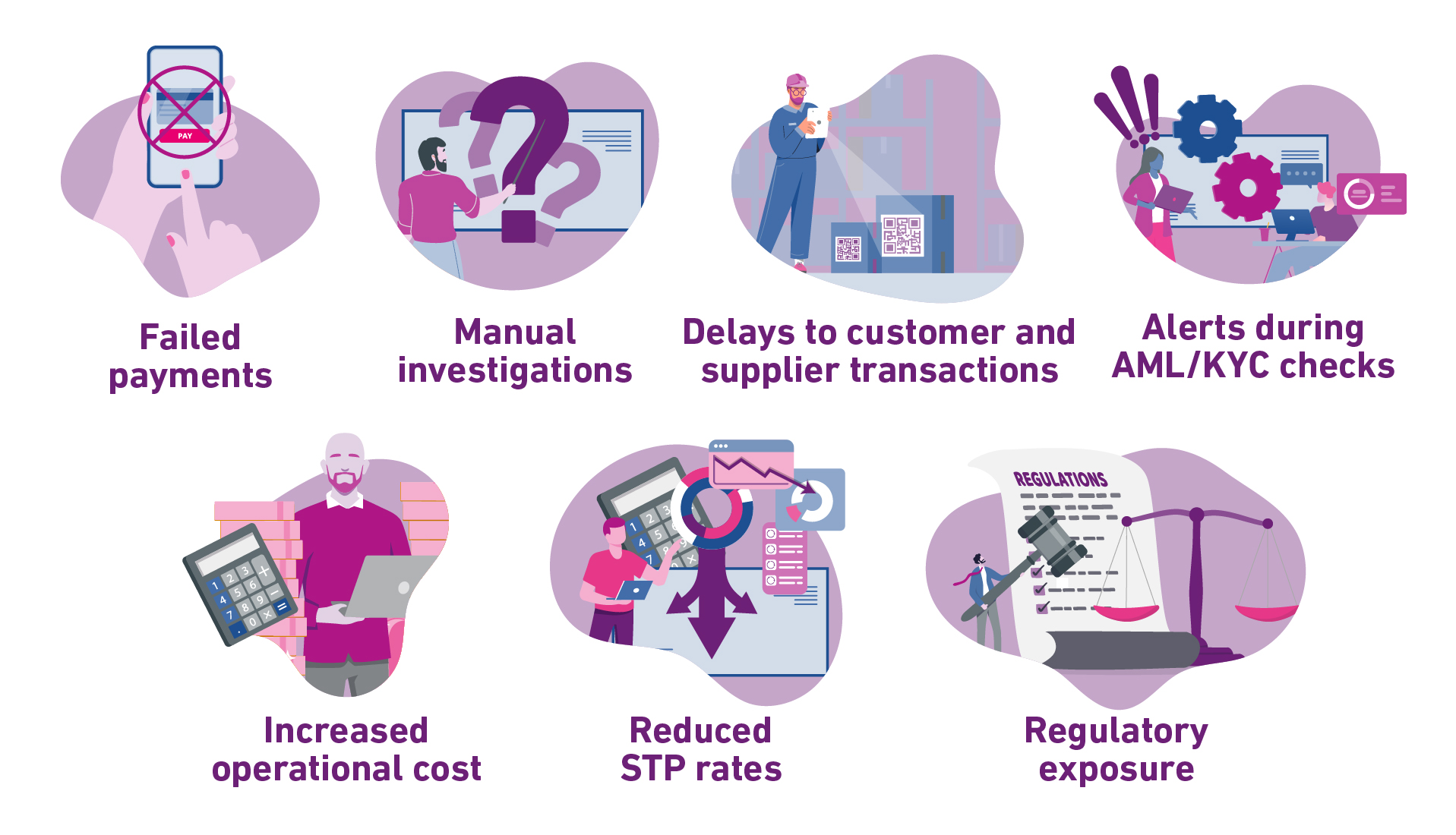
Poor address data will directly cause:
- Failed payments
- Manual investigations
- Delays to customer and supplier transactions
- Alerts during AML/KYC checks
- Increased operational cost
- Reduced STP rates
- Regulatory exposure
For high‑volume payment processors, this impact is significant.
Driving address accuracy: Lessons from Charles Tyrwhitt
Charles Tyrwhitt implemented Experian’s Address Validation capabilities across online and in‑store channels to ensure only complete and accurate addresses entered their systems. Their approach delivered:
- Real‑time error detection and correction
- Autocomplete for faster, more accurate data entry
- Validation against authoritative postal datasets
- Fully formatted and standardised addresses
- Improved delivery success and fewer downstream issues
The data‑quality principles behind this success are the same foundational steps organisations need to meet ISO 20022’s structured‑address requirements.
For organisations preparing for ISO 20022, applying these same principles is essential to meet the November 2026 structured‑address deadline, reduce payment failures, and ensure stronger compliance across cross‑border payment workflows.
Clean address data works, and ISO 20022 now makes it essential.
Aperture Data Studio: The platform for ISO20022-ready data
Meeting ISO 20022 requirements requires more than basic validation. Organisations must cleanse, format, and govern all postal address data at scale.
With Aperture Data Studio, organisations can structure their legacy address data in bulk and in real-time before new addresses enter the system of record. Integrated catalog and governance capabilities enable teams to register, monitor, and maintain their data to ensure it remains compliant.
With Aperture Data Studio, you can:
- Identify unstructured addresses at scale
- Ensure consistent, high‑quality data across systems
- Enforce mandatory Town & Country fields
- Support hybrid and fully structured formats
- Gain confidence that enriched data meets required standards
- Reduce payment errors and exceptions, improving customer experience
- Strengthen governance and demonstrate compliance with ease
- Reduce operational risk and modernise data foundations
This combination of governance, remediation and orchestration goes far beyond traditional address‑lookup tools. Aperture Data Studio helps organisations establish a trusted data foundation, not just meet ISO 20022 requirements.
ISO 20022 address‑readiness checklist
Your organisation may be at risk if:
- Your customer addresses as free text
- Town or Country fields are missing
- You rely on manual cleansing or spreadsheets
- You cannot validate outbound payment files
- You have no enterprise‑wide governance for address data
If any of these apply, it’s important to address them now to support a smooth transition to ISO 20022.
How can Experian help?
ISO 20022 impacts every part of the financial ecosystem, and any organisation sending SWIFT messages must meet the new structured‑address requirements from 2025–2026.
Across banking, insurance, asset management and corporate finance, we’re already helping clients cleanse, complete, structure and govern their address data at scale.
We support ISO 20022 readiness through:
- Address Compliance Assessments to pinpoint gaps and quantify exposure
- Real‑time address validation, formatting and enrichment to improve data quality at client onboarding
- Payment‑file validation against ISO 20022 structured‑address rules and support for standardising legacy address data at scale
- ISO 20022 migration roadmapping with expert consultancy support
Get ready for ISO 20022 with Experian today
Address validation turns ISO 20022 from a compliance burden into a data‑driven advantage —reducing risk, improving efficiency, and powering higher‑quality payments.
Get ready now