
Summary
- Identity verification helps stop fraud, especially as criminals use AI, deepfakes, and fake documents more often.
- Modern checks use digital tools, such as document scans, biometrics, and device or behaviour analysis, to verify people remotely.
- Using multiple checks together is most effective, improving security while keeping the customer experience smooth.
- Digital identity verification supports legal compliance and inclusion, helping businesses meet regulations while validating customers with different types of ID.
Why does identity verification matter?
AI is having a significant impact on every industry and sector by reshaping the way we think, operate, and work. But for all the positive time efficiencies and cost savings it brings, there’s also a darker impact that no business area is resistant to.
Our latest UK Identity and Fraud report found that 23% of businesses had knowingly encountered Gen-AI related fraud in 2024 and, shockingly, this figure had jumped to 35% within the first few months of 2025. Without the appropriate due diligence, this is likely set to rise.
As fraudsters use deepfakes, synthetic identities, and forged documents to launch bolder and more sophisticated attacks, businesses must similarly evolve. To protect both your operations and customers, it’s essential to create more robust anti-fraud strategies, and one of the key ways to do this is with identity verification.
What is identity verification?
Identity verification is a process used to confirm and authenticate the identity of an individual. It typically involves verifying the accuracy and legitimacy of information provided by an individual to ensure they are who they claim to be.
Back in the day, this process happened face to face. Opening a bank account or making a large payment were done in person, and so would require paper documentation as proof of identity. Now, in our digital-first world where consumers bank, shop, and access pretty much all services via a device, providers need more robust and comprehensive ways to identify and authenticate consumers remotely using digital tools.
There are a huge variety of technologies and processes that allow for effective and remote digital identity verification, and they fall into two key categories:
1. A digital approach to traditional identity verification
This includes the ability to check customers’ details, such as name, address and date of birth, against trusted data sources, like banking records. It could also mean verifying their identity documents remotely using AI or machine learning technologies.
2. An analysis of customers’ behaviour, devices, or digital footprints
This includes using device biometrics and data analytics to understand more about the device a customer is using to make their application. Here, the device’s location and IP address can be cross-checked with the customers’ identity information and documentation, essentially ensuring that the data points match and the process is happening in an expected location. This category also includes behavioural biometrics, which does what it says on the tin and helps organisations analyse how customers interact with – and behave – during the application process. The results can help indicate whether an online identity is genuine or fake.
What about identity validation and authentication?
The term ‘identity verification’ often, understandably, gets used interchangeably with ‘identity validation’ and ‘identity authentication’. But they’re actually three distinct steps in the process of establishing and trusting a person’s identity:
- Identity validation checks a user’s details against trusted sources to ensure they exist.
- Identity verification connects that real-world person to the validated data.
- Identity authentication is the ongoing process of confirming that a returning user is the same person who set up the account.
What is it?
Identity validation is where an individual’s personal information, such as their name, phone number, or email address, is checked against trusted databases, such as postal address files, phone records, or even basic credit data, to ensure they exist in the real world. Once it’s confirmed that the individual exists, customers are issued with a username and password to validate their identity whenever they login to the business’s website or app.
It’s often used to onboard customers for low-risk products, such as setting up an account with an online retailer.
Benefits
This process is quick and simple, which makes access to products and services frictionless and means there’s less chance of a customer abandoning the activity.
Challenges
Identity validation doesn’t provide organisations with a high level of assurance that a customer is who they say they are. It just simply confirms that they exist. This means a fraudster can easily set up a fake account using real data that isn’t theirs.
What is it?
Identity authentication is the routine process of checking a customer’s identity against information that only the user should have, or know. This is to ensure they are who they say they are, and can involve using:
- Existing information already provided by the individual, such as asking a question that’s personal to them (like their mother’s maiden name)
- A one-time password sent to their mobile phone
- Biometrics, such as fingerprint recognition
Whichever approach is used, customers must authenticate their identity before they can log into an existing account.
Benefits
This process is a key way of enhancing security and reducing fraud by preventing unauthorised user access.
Challenges
Authentication can introduce friction into the customer journey. However, advances in this area, including biometrics, are improving the customer experience and providing greater certainty for businesses.
How to verify someone’s identity
There are many ways to verify an identity, ranging from analysing a person’s identifiable information to tracking how customers access sites via their mobile.
While each technique addresses specific risks individually, they are best used simultaneously within a strategic framework that’s tailored to your company’s unique needs. This will provide a stronger, multi-layered protection against fraud.
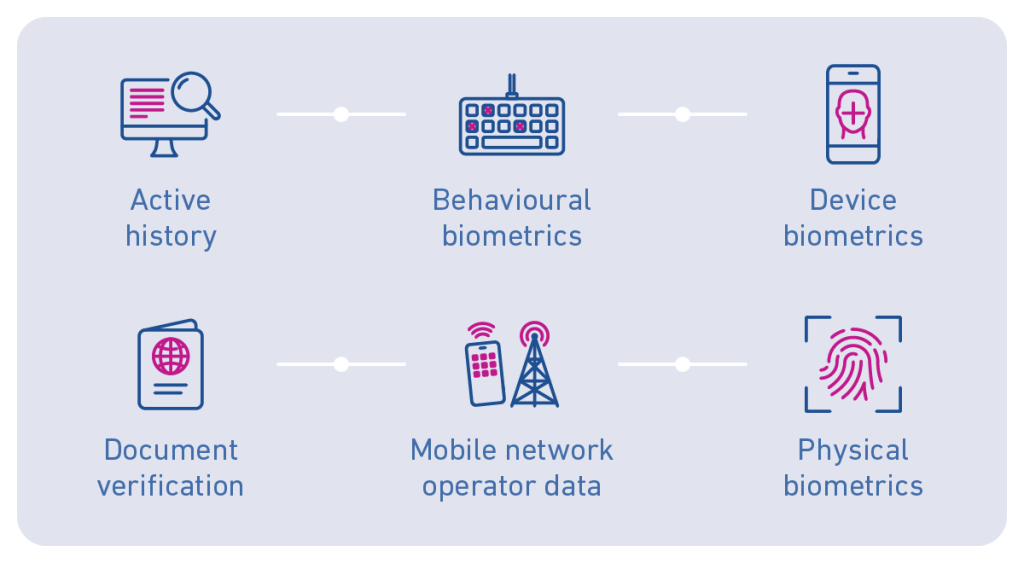
Activity history
Identity verification works by matching a person’s digital footprint, such as their financial transactions and online account usage, against existing databases, like credit bureaus. To strengthen this process, you can layer in demographic data and social network history to provide an extra level of confidence that the person is who they say they are.
Behavioural biometrics
This fraud technique analyses customers’ unique behavioural patterns, such as their typing speed, finger strokes, or mouse movements, to verify their identity. This doesn’t just improve security, but also provides a more seamless customer experience, with no need to remember endless passwords and security questions.
Device biometrics
This method collects and analyses data about customers’ devices. For example, the IP address of the device and the device location are key data points that can indicate whether a customer is genuine (and in the location you’d expect them to be in) or attempting to commit fraud.
Document verification
It’s commonplace to ask customers to take a photograph of an identity document, such as a passport, driver’s license or ID card, and upload it for review. Using an AI-powered facial recognition application, it’s possible to verify that the photograph on the document is genuine, rather than a computer-generated image or a picture of someone else. While these kinds of AI-powered document verification solutions are able to add trust to consumers’ digital identities quickly, cost-effectively, and at scale, fraudsters are now also using AI to generate increasingly convincing fake ID documents. This means, it’s essential to constantly review and upgrade your document verification tools to stay one step ahead of fraud risks. A liveness check (to confirm that a customer is physically present) can be used in this instance.
Mobile network operator data
This is considered an ‘alternative’ data type that can give you access to a customer’s mobile phone identity. It will include their name, address, device details, and other information that’s typically associated with a phone number or contract.
Activity history
Identity verification works by matching a person’s digital footprint, such as their financial transactions and online account usage, against existing databases, like credit bureaus. To strengthen this process, you can layer in demographic data and social network history to provide an extra level of confidence that the person is who they say they are.
Who needs to undertake digital identity verification?
Digital identity verification is non-negotiable for all UK businesses. No matter the industry, every single employer is legally required to verify a candidate’s identity and their Right to Work in the UK.
There are, of course, nuances to this in terms of the level of checks and verification required. For example, businesses who are required to adhere to Anti-Money Laundering (AML) regulations, to prevent money laundering and terrorist financing, will require stricter checks than online supermarkets or eCommerce retailers selling alcohol or age-restricted goods.
These higher-risk organisations include:
- Accountants, auditors, tax advisers, and insolvency practitioners
- Banks, building societies, credit unions, wealth managers, and lenders
- Businesses who accept high-value cash payments, such as luxury car dealers, art galleries, or high-end jewellers
- Casinos and online betting operators
- Estate agents, landlords, and letting agents
- Solicitors, conveyancers, and independent legal professionals, especially those handling financial or property transactions.
What are the benefits of digital identity verification?
Fraud prevention is the name of the game when it comes to digital identity verification. However, the process comes with many advantages. From protecting customers and minimising financial losses, to safeguarding your reputation, the benefits are clear.
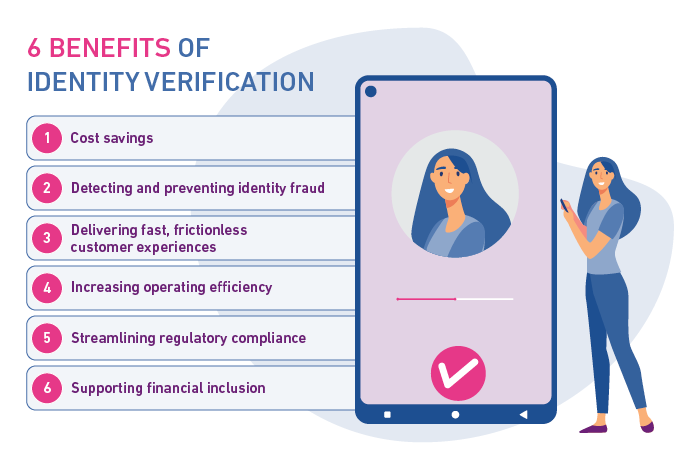
Delivering an excellent customer experience
Making the verification process streamlined and easy helps ensure fast and comprehensive compliance, but more than that it’s an opportunity to create positive interactions and foster a strong relationship with your customers. By providing a transparent, frictionless, and automatic way to review documents and check IDs you can reduce abandonment rates and significantly improve the online customer experience. In a world where ID checks are routine for most customer interactions, a positive experience can stand you head and shoulders above other companies.
Detecting and preventing identity fraud
Digital identity verification processes provide the strongest possible defence against identity fraud. A key way to check the identity of an individual is to cross-reference their information with trusted data sources. Using AI technologies to examine and verify identification documents, as well as behavioural biometrics solutions, creates a multi-layered security defense that is critical to combat modern fraud techniques.
Increasing operational efficiency
There’s no two ways about it, manual identity verification processes are time consuming. However, this issue can be overcome with multi-layered, automated ID verification approaches that use multiple techniques – including document verification, device biometrics, or behavioural biometrics – to minimise manual interventions and reduce administrative costs, leaving your team free to take on other tasks.
Saving money
Manual identity verification processes can be extremely costly for organisations. However, with multi-layered, automated solutions it’s possible to reduce unnecessary administrative costs. This makes it a win-win solution for both the business saving costs and the customer, who can enjoy a streamlined experience.
Streamlining regulatory compliance
Adhering to regulatory compliance is a must for all businesses. But for those within high-risk industries, such as financial services, you could be exposing yourself to costly fines, colossal brand damage, and even criminal penalties. Identity verification allows you to comply more easily with the mandatory regulatory processes, such as Know Your Customer or AML. It’s also possible for identity verification to support specific industry regulations or requirements, such as age verification for adult products, services or content, or to ensure that gaming companies recognise and protect vulnerable customers, for example.
Supporting financial inclusion
Not all customers have passports or other ‘strong’ identification documents, and many lack credit histories, either because they are young people, working for the first time, or new to the country. In these cases, digital identity verification solutions can use multiple data sources to verify that a customer is who they say they are, including documents such as driving licenses or mobile phone bills. Although this kind of authentication may not give new customers access to high-value products, it could help to get them on the ladder in terms of accessing basic financial services, which are essential for financial inclusion.
We can help
We have a range of verification services and solutions, from basic ID authentication to end-to-end AML and Right to Work checks, that use billions of data items to spot forged documents and inconsistencies at volume and speed. This not only ensures you remain compliant with all regulations, but can help prevent fraud and protect your business and customers.
These extensive, cloud-based services can be:
- deployed quickly and easily
- performed instantly and accurately, 24/7
- used across a customers’ lifecycle
- tailored to your company’s unique risk profile and needs
- accessed via a configurable API to support your existing workflows
Find out more
See how our identity verification solutions can help you, and speak to our expert team for more.
Explore solutions