
Guide
What is an acid ratio?
A guide to an acid ratio, what it is and why it is important for your business.

19 August 2026
read
What is an acid ratio?
An acid ratio, also referred to as a quick ratio, is a measure of whether a business has enough short-term assets (easily convertible to cash) to cover its current liabilities (what it owes).
It helps assess financial stability by showing if a company can meet immediate obligations. A higher acid ratio indicates stronger short-term financial stability.
Why does an acid ratio matter for your business?
As a business owner, you must evaluate potential risks before making major financial decisions – this is where an acid ratio helps.
An acid ratio is an important metric for business owners because it gives a realistic indication of whether a business can cover its short-term financial obligations without needing to sell inventory or take out financing.
Key takeaway
Also known as the quick ratio, the acid ratio metric gives an indication of financial stability and whether a business can cover its short-term financial obligations.
Acid ratio formula
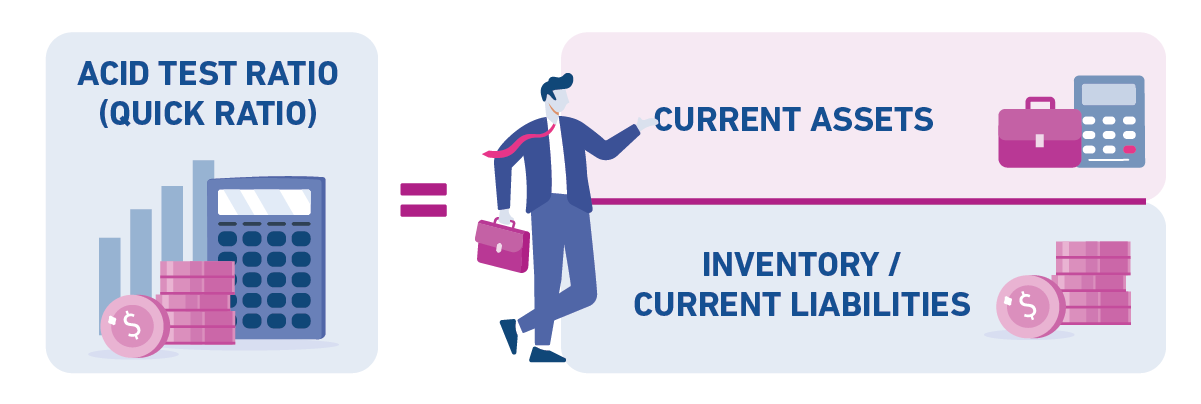
An acid ratio is calculated using this formula:
Acid Test Ratio (Quick Ratio) = Current assets – Inventory / Current Liabilities
Example of current assets
Current assets: Short-term assets that can easily be converted into cash within a year. These are listed on your company’s balance sheet and include cash, accounts receivable, short-term investments and prepaid expenses.
Example of inventory
Inventory: All the goods and materials your business holds that could be sold over time to customers to make profit. Inventory is subtracted from the current assets value because it can often be a slow-moving process and cannot readily be converted into cash within one year.
Examples of current liabilities
Current liabilities: Obligations that need to be paid within a year, such as taxes payable, bank overdrafts, dividends, expenses, accounts payable, wages and short-term loans.
Acid test ratio example
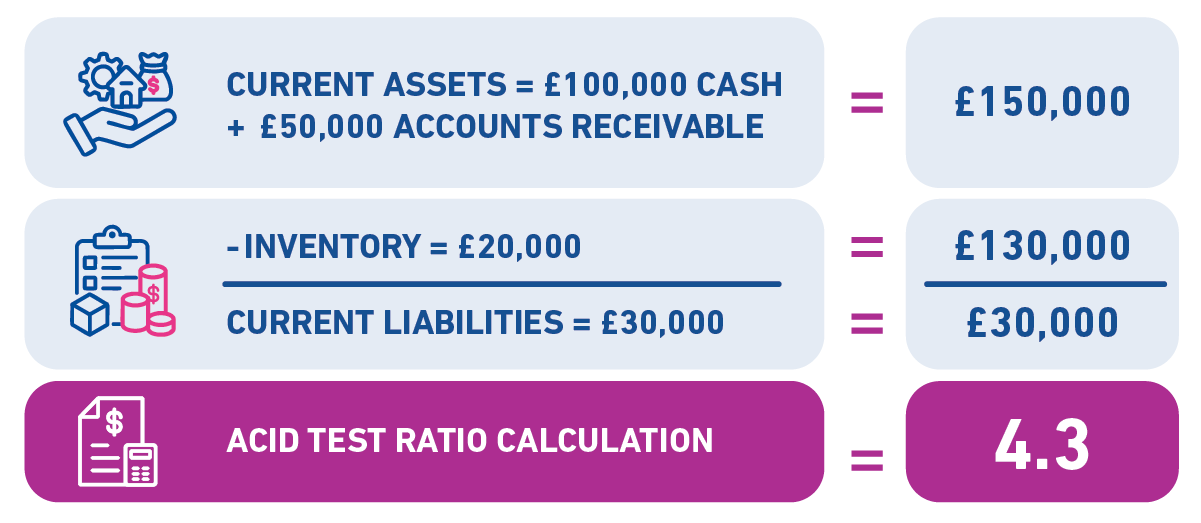
Current assets = £100,000 cash, £50,000 accounts receivable = £150,000
Inventory = £20,000
Current liabilities = £30,000
Acid test ratio calculation = Current assets – Inventory (£130,000) / Current liabilities (£30,000) = Acid test ratio = 4.3
This example demonstrates that this company would have enough current assets (short-term assets) to pay its immediate liabilities.
If your acid ratio is less than 1 it could indicate that your business might not have enough current assets to cover what it owes.
Importance of an acid ratio
An acid ratio is important to business owners because it delivers a true evaluation of your company’s financial health.
An acid test ratio will indicate if your business has enough current assets to cover its immediate financial liabilities without relying on the sale of inventory or on you obtaining additional financing, such as by taking out loans.
It is crucial to understand the importance of an acid ratio, how it is calculated and to interpret the result to make the necessary steps to safeguard your business’s financial health.
Key takeaway
If your acid ratio is less than 1 it could indicate that your business might not have enough current assets to cover what it owes.
How can we help?
Experian business credit reports give company owners greater insight into their business’ financial stability, allowing them to make quick and informed decisions.